
Compare the Values on a Clinton County Property Record
Figuring out a Clinton County property value starts with knowing which number you are reading. Assessment rolls carry several figures. Each one has its own legal purpose. A deed records what a past transaction actually paid. Both can be correct and still disagree. Before you search Clinton County property records by parcel, note the field label. Also note the tax year, the parcel number, and where the data came source. A government assessment is not a market opinion. Keeping those pieces straight makes any Clinton County property value easier to compare. You can weigh parcel against parcel or year against year. You will not mistake a tax record for an appraisal.
| Value | What It Is | Where |
|---|---|---|
| Assessed value | Michigan's assessment figure at 50 percent of true cash value | Local assessment roll |
| True cash value | The usual selling-price or fair-market-value concept | Assessment methodology and notices |
| Taxable value | The capped figure used to calculate property tax | Assessment and tax record |
| Last sale price | Consideration tied to a past transfer, not a current valuation | Recorded deed and available sales fields |
Twice the assessed value does not guarantee a sale price. True cash value comes from mass assessment, while a deed records one real transaction between real parties. Taxable value sits on its own track entirely, because Proposal A caps its annual growth until a transfer generally uncaps the parcel the following calendar year.
Read Clinton County Assessed Value at the 50-Percent Level
Michigan's basic assessing guide puts assessed value at 50 percent of true cash value. That is the statutory level for the tax roll. Equalization reviews each local assessor's work for countywide equity, and it publishes annual reports and tentative ratios. It also connects to the state property-tax estimator. The 50-percent rule gives context for reading the roll. It is not a promise of an exact sale price. A specific parcel would not necessarily sell for any exact multiple of its assessed figure.
Do not turn a ratio into an appraisal. The 50-percent rule explains assessed value, but condition, date, market evidence, and parcel facts still matter.
Record the tax year and the field label exactly as they appear. Terms like “MBOR Assessed” and “Final SEV” mark distinct stages within Michigan's assessment system. A loose label such as “value” hides which number was actually copied.
Separate Clinton County SEV From Taxable Value
State Equalized Value and taxable value are not interchangeable. Under Proposal A, taxable value is generally the lesser of SEV or capped value. The cap grows by inflation or 5 percent, whichever is smaller. That quirk explains why two similar Clinton County properties can carry different taxable values. Their assessments may nearly match. The difference comes from the cap, not the assessment itself. A transfer of ownership generally uncaps taxable value the following calendar year. A new cap starts from there. Uncapping does not rewrite the earlier sale price. It is not a countywide revaluation either. No official county source names a single last revaluation year. So that detail should not be asserted from a property search alone.
Look Up a Clinton County Property Value by Parcel
The county Search hub links Clinton County Assessing Records through AccessMyGov, where users may look up a parcel by owner name, address, or parcel number. Exact screen labels can vary by session, so read them from the live interface. FetchGIS offers a second view of the property records, with fields for assessment history, sales, taxes, land, buildings, owner, address, acreage, and zoning.
- Search Clinton County Assessing Records by address, then save the parcel identification number.
- Record the year and exact labels for assessed, SEV, taxable, land, and improvement values shown.
- Open the same PIN in FetchGIS and compare its assessment-history and sales fields.
- Use the recorded deed to confirm a sale event rather than treating a portal summary as the original instrument.
- Assessed value
- One-half of true cash value under Michigan's stated assessment level.
- True cash or market value
- The usual selling-price concept used in assessment law, not a guaranteed sale result.
- Assessment ratio
- The relationship between assessed value and true cash value.
- Sale consideration
- The amount associated with a recorded transfer event.
- Reassessment
- A new review or update of property facts and valuation, which must be tied to its actual notice and year.
Compare Clinton County Land and Improvement Components
County GIS layers show land and building details alongside assessment history. That split reveals how the record allocates value between the site and its improvements. It still belongs to the assessment system, though. It is not a contractor's estimate. Nor is it a replacement-cost quote or an itemized appraisal of every feature. Treat the building and land fields as diagnostic clues. A sharp jump may point to new construction, demolition, corrected characteristics, reinspection, equalization, or other roll work. Confirm the reason in the assessment record itself. The notice may also explain it. Do not assign a cause from the numbers alone.
Place Clinton County Recorded Sales in Time
A sales-information field or a recorded deed proves a transfer happened and may show the consideration. It does not establish what the parcel is worth today. Before using the amount as a reference, check that the deed's legal description, parties, document date, and recording date all match the parcel. Compare sale events only after confirming a few things. Was the land split or combined? Did the improvements change? Was the transaction an ordinary market sale? Clinton County's recorder index is evidence of recorded instruments, not a title opinion or an appraisal.
Keep PRE Separate From Clinton County Market Value
A principal residence exemption can remove up to 18 school-operating mills. This applies when state eligibility rules are met. The PRE flag or percentage changes the tax treatment only. It does not convert taxable value into assessed value. It also proves nothing about what a buyer would pay. Questions about the tax bill, exemption administration, or appeals belong in the Clinton County property tax records guide. A valuation worksheet should simply preserve the PRE field beside the year. That way a tax difference never gets mistaken for a market-value difference.
Date Clinton County GIS and Assessment Evidence
Clinton County IT describes 2025 parcel data and 2020 aerial products. A current parcel polygon can therefore sit on older photography. That mismatch alone does not prove an improvement is missing from assessment records. It also does not prove the mapped parcel is wrong.
Assessment changes can flow from annual roll work, transfer uncapping, physical reinspection, or equalization. Save the page date, roll year, and layer vintage with each property value. The county publishes no countywide current-value trend and names no single last revaluation year. So neither should be inferred from a refresh date.
The county links the assessment search entry directly. Its live results, however, require a user session.
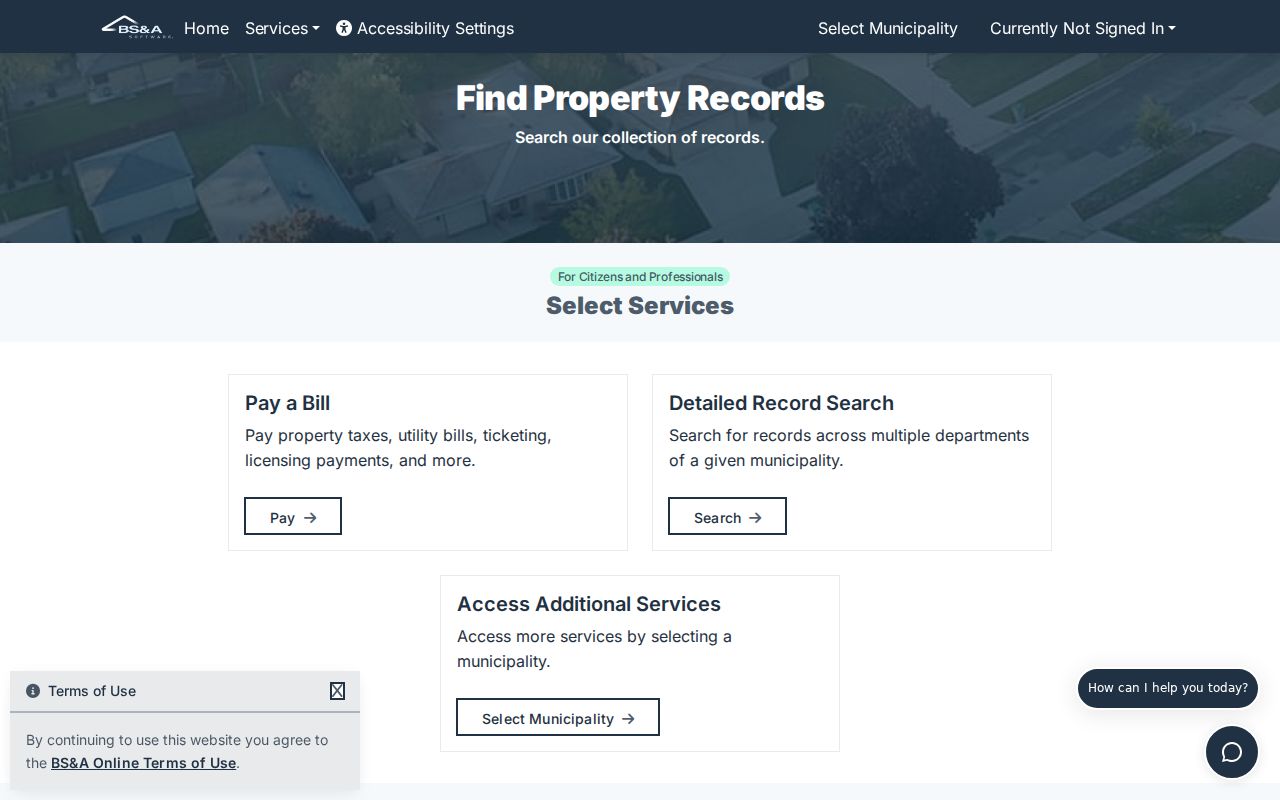
The official Clinton County GIS and assessment pages back up the access route described here. Exact labels on a live result screen can shift, so read them in an active session.
Treat Clinton County Tax History as a Separate Signal
Tax history is its own signal. FetchGIS carries tax-history details. The Clinton County Treasurer handles tax and delinquency records for the county. Those entries show amounts and status tied to a given tax year. They do not replace the assessment field or a recorded deed. A delinquency or foreclosure status is a payment and legal matter, not a valuation method.
Keep three columns in any comparison. Record the valuation year and field. Note the transaction date and consideration. Track the tax year with its status. That separation keeps a paid amount, a delinquent balance, or an old sale from being mistaken for the current assessed value in Clinton County property records.
Know What a Clinton County Property Value Does Not Prove
A Clinton County assessment is a government valuation built for the property-tax system. It promises no sale price. It does not certify physical condition, fix a legal boundary, or replace a title review. Likewise, one recorded consideration on a deed proves nothing. It is not the parcel's present true cash value. Each record in the property search stays useful. Its date and purpose must stay attached to it.
For a current transaction, get an appraisal suited to that purpose. For a legal description or an owner-of-record question, use the recorded instrument and professional help. Stretching an assessor field beyond its role invites real trouble.
Value is not price. A Clinton County assessed value supports taxation and is neither a predicted sale price nor a property appraisal.