
Read Clinton County Owner Records
Clinton County points researchers to its assessing records. Those records support lookups by owner, address, and parcel. The FetchGIS viewer exposes an Owner field. It also keeps the Owner Address separate from the Property Address. Read together, those fields form the current snapshot that the county's tax records display. Treat any field label you encounter as a display choice. It is not a legal statement of ownership.
| Record field | What the roll or GIS shows |
|---|---|
| Owner | Name attached to the selected parcel in FetchGIS |
| Owner Address | Mailing destination associated with that record |
| Property Address | Situs, or physical parcel location |
| Parcel/PIN | Cross-system key for the selected tax parcel |
| Tax Description | Tax description used to compare the deed |
| Sales Information | Event history checked separately against deeds |
An owner field names no occupant. A mailing address proves nothing about where someone lives. Before drawing any current-owner conclusion, match the PIN, the situs address, and the tax description, then look for the latest conveyance. When a parcel sold recently, note the date behind each source you checked.
Confirm Clinton County Current Owners
Treat the tax roll as the assessment snapshot. Then compare it against the newest relevant instrument in the Clinton County deed index. A deed recorded this week can beat the assessor display by weeks or more. The county publishes no fixed closing-to-roll lag. It also posts no owner-field refresh schedule. So never date a current owner by guesswork alone.
- Search the county-linked assessing records by address and copy the displayed owner, PIN, situs, and mailing address.
- Use that PIN in FetchGIS and compare the selected shape, tax description, and property details.
- Search the deed index for the displayed name and identify the newest conveyance tied to the same legal description.
- Read the full deed image when available. Save the recording date, grantee, instrument reference, and source-check date.
- Owner of record
- The party a specific public record identifies with the parcel or interest.
- Assessment roll
- The tax record used to identify and value a parcel.
- Situs address
- The physical site, distinct from an owner mailing address.
- Recording lag
- The interval during which a new deed and tax-roll display may differ.
Open Clinton County Assessing Records
The official county Search hub states that assessing records can be searched by owner, address, or parcel. It also links to the AccessMyGov route for reaching those records.
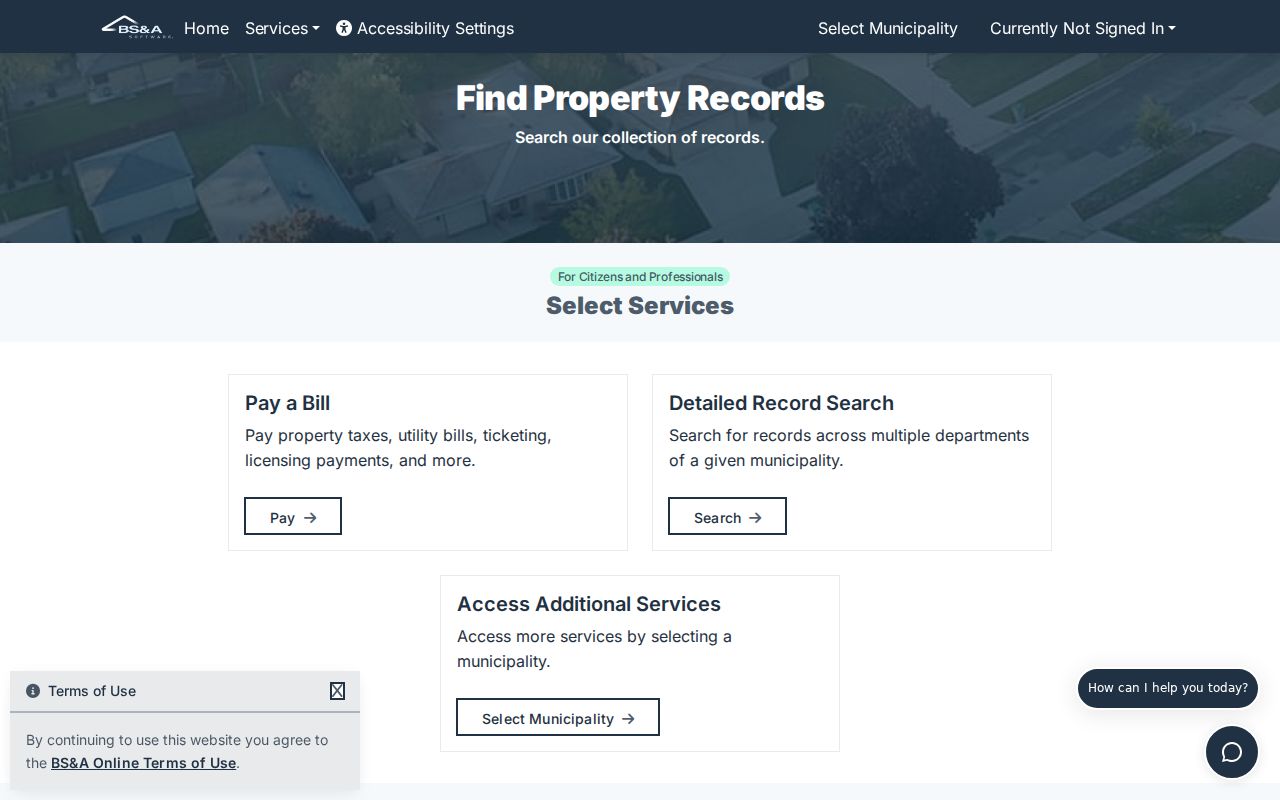
That Search hub documents the official access route rather than any particular parcel. The exact label on the current-owner field is best confirmed within the official records themselves, since access may require additional steps on the county's own portal.
Date Clinton County Owner Evidence
Michigan generally uncaps taxable value in the calendar year after an ownership transfer. That rule governs taxable value only. It promises nothing about when Clinton County's displayed owner changes. A deed recorded today and an assessor result checked today can tell different chronological stories. Neither system serves the other's purpose.
Preserve four dates as you work. Keep the deed recording date, the date of any assessor or GIS check, the tax year, and any sale date shown on screen. Also search for later corrective deeds or other conveyances. The most recent relevant deed is stronger evidence of timing than an older roll snapshot. Even so, a professional title review may still be needed.
Recent sale gap. The Clinton County roll may lag a new conveyance. Check the newest recorded deed before naming the current owner.
Check Clinton County Owner Forms
The owner of record can be a person, a married pair, a trust, an LLC, an estate, or a fiduciary. Search the exact roll name first. Then try reasonable spelling variants in the deed index. A trust may be abbreviated. An estate may appear only during administration. A joint deed can list multiple grantees even when the tax display compresses them into one line.
For an LLC or corporation, open the official Michigan MiBusiness Registry Portal to verify the entity name and registered office. That state result helps separate entities with similar names. It does not establish who owns a parcel. A registered agent is not automatically the landowner.
Note: Never swap an entity owner for a person unless a recorded instrument actually makes that link.
Compare Clinton County Owner Addresses
FetchGIS draws a clean line between the Property Address and the Owner Address. The first is the physical land. The second exists for owner correspondence. It can sit outside the parcel, the county, or even the state. That split is common for vacant land, business entities, trusts, and estates. It also appears for anyone with a different mailing location.
Use the mailing address only as the address shown on the roll. Never claim it is where the owner lives. A deed rests on parties and a legal description, not a mailing label. When address labels conflict, the PIN and legal description stabilize the match.
Monitor Clinton County Owner Activity
The recorder's Fraud Guard service emails registered users when a monitored name appears on a newly recorded Clinton County document. It can flag a deed, mortgage, lien, or other indexed activity. Each alert gives the owner of record an early reason to look.
Fraud Guard cannot block a recording or declare any document valid. Review each alert against the full recorded image, and contact the Register of Deeds when the activity is unfamiliar.
Request Clinton County Owner Proof
The Register of Deeds does not limit owner-of-record requests to an online channel. Mail, fax, email, and walk-in requests all work. The office sits at 100 E State Street, Suite 2500, St Johns, MI 48879, and takes requests at rod@clinton-county.org or 989-224-5270. Posted weekday hours are 8 a.m. to noon and 1 to 5 p.m. The office recommends arriving by 4:30 p.m.
Costs appear on the current county fee page. Real-estate copies run $1 per page, and certification adds $5 per document plus the copied pages. A name search costs $0.50 per year with a $5 minimum. An older request form adds fax or email fees and limits certified delivery, so rely on the current page whenever the two documents differ.
Check Clinton County Record Depth
The county says its online deed copies reach back to June 19, 1964. The live recorder notice tells a different story. Records filed before December 15, 1965 carry only limited fields, listing just the recording date and time, document type, document date, grantor, and grantee. The official text never reconciles the two dates, and neither one says how fast the assessor's current-owner field refreshes.
For a current owner, that cutoff rarely matters. It matters when the newest deed leans on an older legal description, an easement, or a parcel split. Then pull the older image. Viewing, purchasing, or printing Tyler documents requires registration. If the image you need is not online, the office can handle the request directly. Supply the instrument number, parties, date, and legal description.
An index is only an index. Read the full image before relying on its terms. Staff will search and provide copies, though they cannot draft or change a deed, give legal advice, or supply blank forms.
Use Clinton County Owner Records Lawfully
A public owner address can help with a property purchase inquiry, a boundary question, an easement dispute, an estate matter, or a deed-fraud response. Keep contact focused on the property. Respect any request to stop. The tax roll does not authorize anyone to approach a home, publish sensitive details, or guess who occupies a site.
Michigan's Address Confidentiality Program gives qualifying survivors a designated address and mail forwarding, so never try to defeat that protection through linked records. When legal ownership must be relied upon, pull the relevant recorded documents. Add suitable professional review. The current-owner screen is not a title opinion.
Lawful use. Clinton County owner records support legitimate property matters. Never use a public name or address to stalk, harass, threaten, or defeat a safety program.