
Fields in Clinton County Property Tax Records
A good tax search names two sources. Clinton County Assessing Records and the GIS property detail supply assessment context. Bill and delinquency facts come from the BSA tax route and the Treasurer. The tax year, taxing unit, parcel key, and settlement date keep the fields aligned.
| Field | What It Shows | Where |
|---|---|---|
| Assessed value | One-half of true cash value under Michigan's assessment standard | Local assessor and assessment record |
| State Equalized Value | Assessed value after equalization | Assessment roll and GIS history |
| Taxable value | The capped value used in the tax calculation | Assessment and tax record |
| PRE flag or percentage | Principal residence exemption status shown for the parcel | Assessment record |
| Bill and payment status | Charges, prior years, delinquency, and total due as dated | BSA tax lookup and Treasurer |
A sale amount records one event. It is not today's true cash value by default, and neither the assessed nor taxable figure works as a current appraisal or predicted price.
Read Clinton County Assessment Values in Order
True cash value is the usual market-price idea. Michigan sets assessed value at 50 percent of it. State Equalized Value reflects equalization across jurisdictions. Under Proposal A, taxable value is generally the lesser of SEV or the capped value, and the cap ordinarily rises by inflation or 5 percent, whichever is less.
Before a transfer
The cap can hold taxable value below SEV even while market and assessed values climb.
After a transfer
A transfer usually uncaps the parcel the next year.
Records can shift after a purchase. That change in Clinton County property tax records reflects uncapping, not a new appraisal at the sale amount.
Search Clinton County Taxes by Three Keys
The county Search hub supports tax and assessment lookups by owner name, address, and parcel. The live AccessMyGov and BSA result screens require sign-in. Field labels and back-year coverage should be confirmed on the spot, not assumed from habit. Match the parcel number and tax year first.
| Search input | Best use | Check before relying |
|---|---|---|
| Address | One known physical site | Situs label and municipality |
| Owner name | Possible parcels under one name | Entity form, spelling, and same-name results |
| Parcel/PIN | Exact tax-account match | All five segments and any displayed prefix |
The county-linked BSA tax route is shown in the first capture.
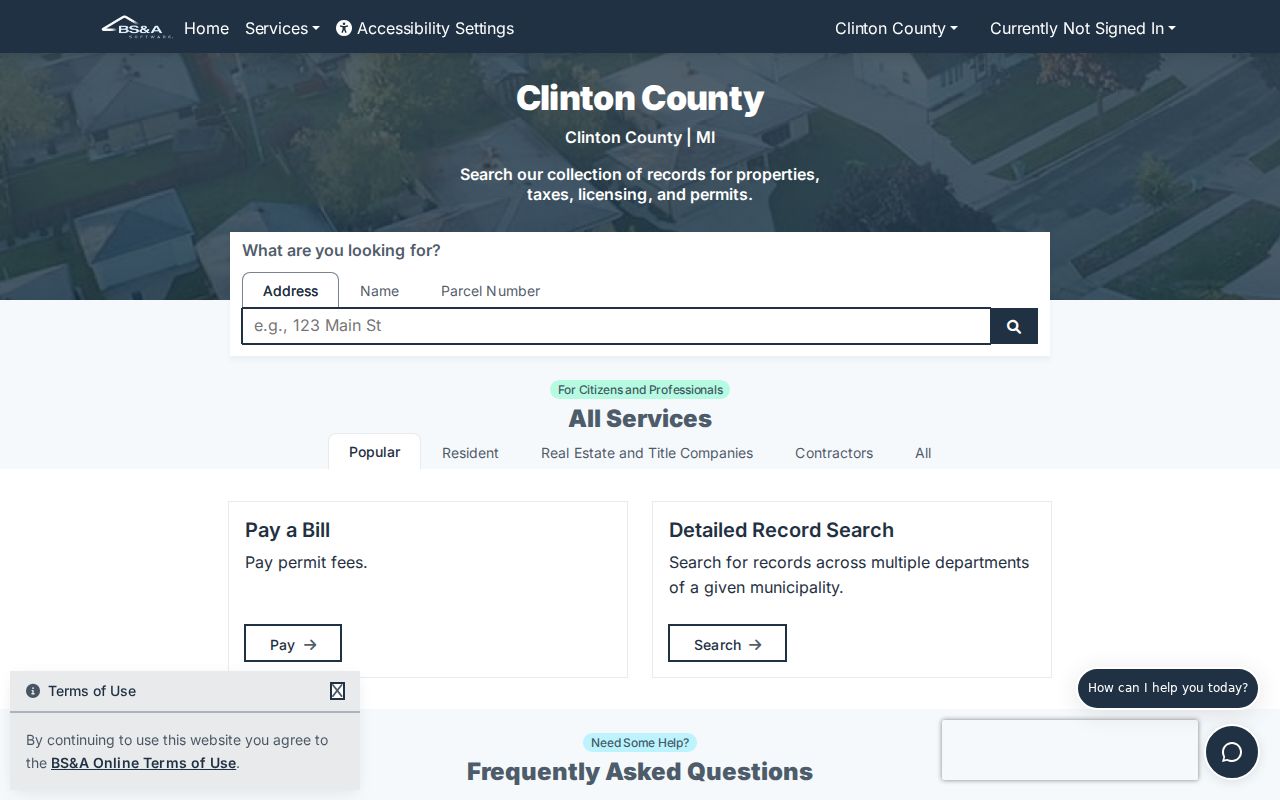
When an online result cannot be read, the Treasurer can confirm the parcel number and tax year. The county-linked assessment route is the official view.
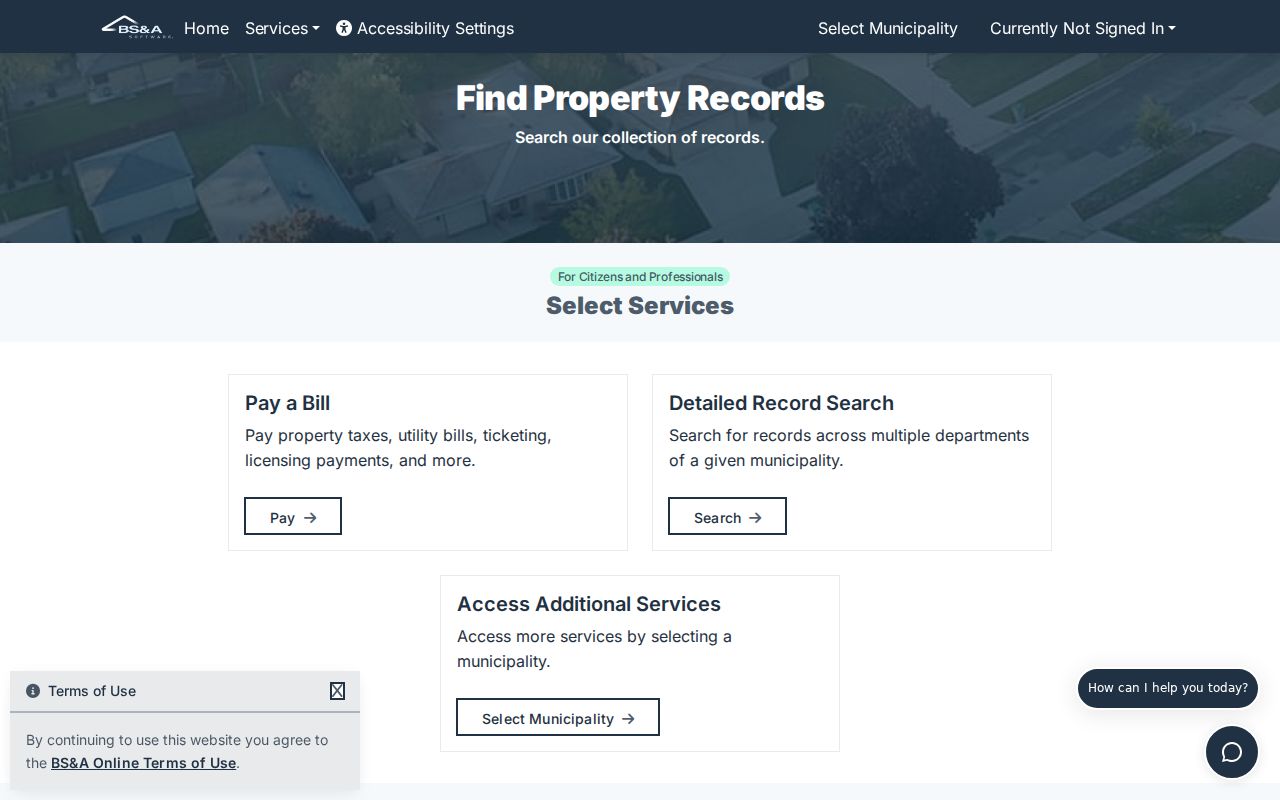
Assessment figures and bill status come from separate records.
How PRE Appears in Clinton County Tax Records
The principal residence exemption can remove up to 18 school-operating mills for eligible owners. It changes the tax burden only. Assessed value and market value stay untouched. Write down the displayed PRE flag or percentage, and note the tax year. A mailing address alone proves nothing about eligibility. Michigan Treasury supplies the PRE forms and an appeal route. An exemption question runs on a different process and deadline than a valuation protest, so read the notice and form title with care. No other local exemptions appear here.
Clinton County Tax History and Settlement Dates
FetchGIS property details include a tax-history report. The report covers prior-year MBOR Assessed, Final SEV, Final Taxable, and delinquent-tax information. Unpaid personal-property taxes are excluded. A total due only holds as of its settlement date. Interest, fees, payments, and status can all change after that. The county tax page warns that its data are not legal documents. The page also says they carry no warranty. It also says postmarks are not honored, and payment must be received by 5 p.m. Restrictions can depend on the delinquent year and payment type. Confirm payment methods with the current Treasurer page.
When a Clinton County Parcel Is Marked Foreclosed
Delinquency is not forfeiture. It is also not foreclosure, state title, or auction. The county publishes a Public Act 123 process with stage-specific dates and fees. Identify the parcel, tax year, and current status first, then use the county foreclosure page as the authoritative timeline.
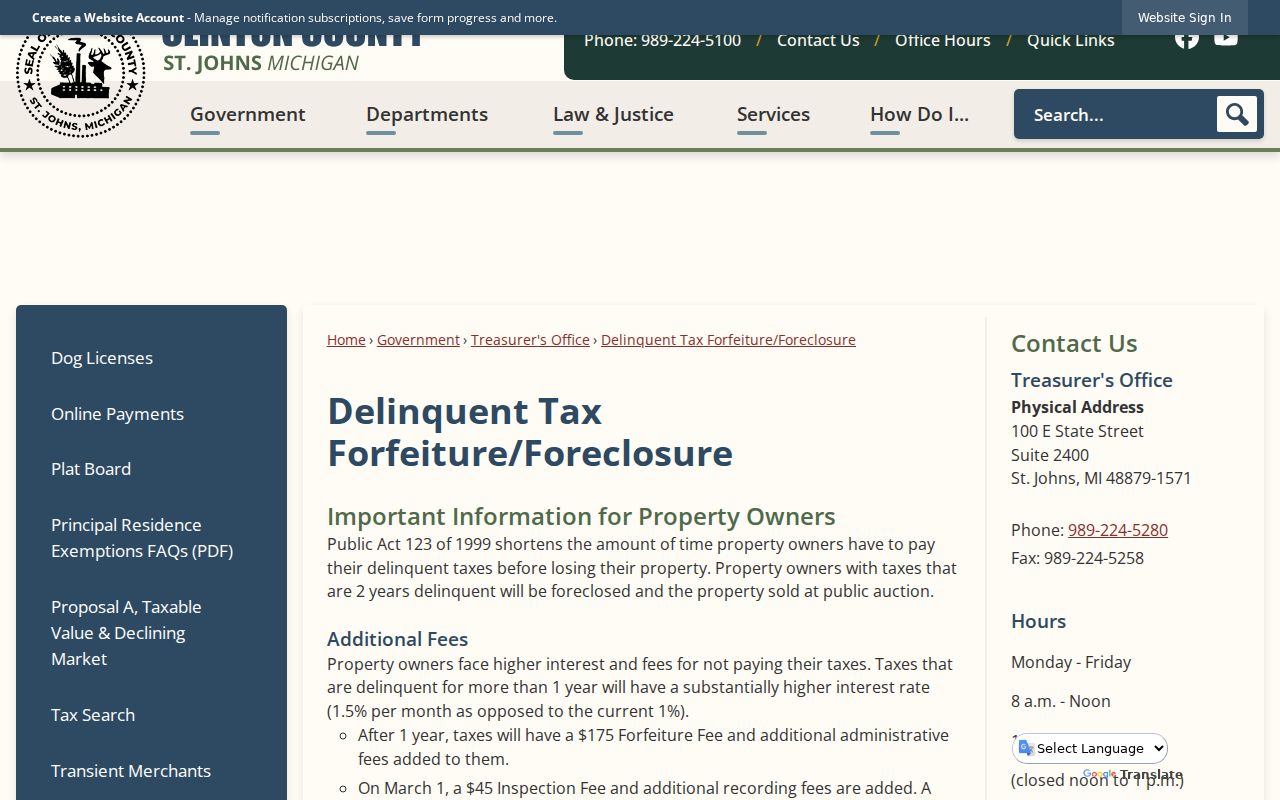
The Treasurer warns that county funds will not be accepted for a parcel marked foreclosed because the State of Michigan has sold it. State Treasury Foreclosure Services is listed at 517-335-3113 for that situation.
Who Maintains Clinton County Property Tax Figures
Assessment and collection are separate jobs. City and township assessors prepare the local rolls. Clinton County Equalization reviews that work for countywide equity and publishes annual reports, millage rates, and tentative ratios. It also links the state tax estimator. The Equalization office sits at 100 E State Street, Suite 1200, St Johns, reachable at 989-224-5170 or equalization@clinton-county.org. The Treasurer handles tax bills and delinquency from Suite 2400 of the same complex, at 989-224-5280. Classification questions start with the local assessor. A payment posting or delinquent balance belongs with the tax office shown on the bill.
Build Evidence for a Clinton County Assessment Review
Start with the assessment notice itself. Confirm which city or township assessing unit issued it. Then pull the parcel card and check its land and improvement facts for errors. Strong evidence includes the property record card, dated photographs, and measurements. Independent market data and sales that are genuinely comparable also help. Under Michigan Tax Tribunal rules, the petitioner carries the burden of proof.
A recent sale alone does not settle true cash value. Nor is a neighboring parcel automatically comparable. Class, condition, size, and transfer history can all differ. Track the assessed value, the SEV, and the taxable value in separate columns. Add the correction you are requesting in its own column too.
The 2026 Michigan Property Tax Appeal Calendar
State Tax Commission material published in October 2025 lays out the 2026 appeal procedures, including a July 31, 2026 Tax Tribunal petition deadline for residential, timber-cutover, and agricultural matters. That statewide date governs the Tribunal route only. It does not replace a local Board of Review schedule or the instructions printed on a particular notice, so confirm the city or township's meeting and filing rules before acting.
No single countywide revaluation year applies here. Clinton County parcel values can shift through annual roll work, transfer uncapping, physical reinspection, or equalization rather than one sweeping event. The state Board of Review instructions cover the official form route.
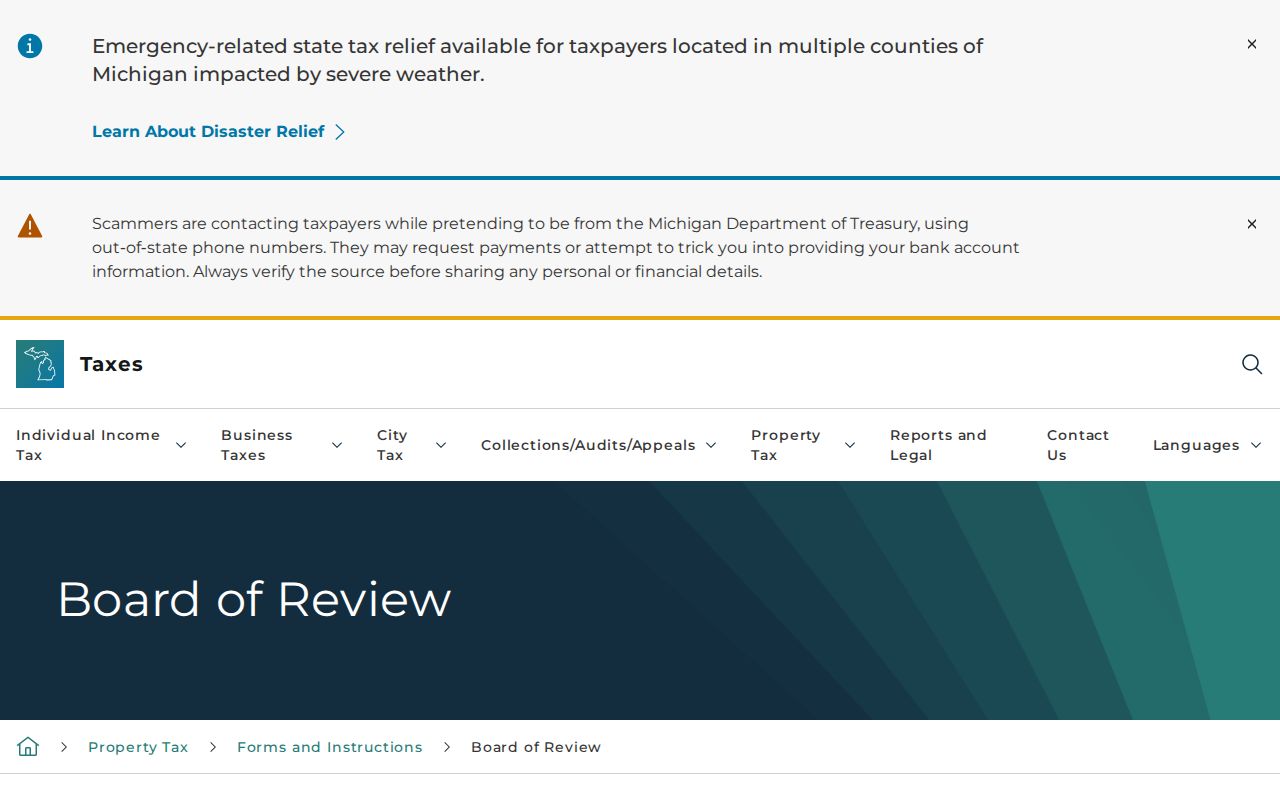
The state page supplements the local notice. It cannot replace the filing calendar for the parcel's own assessing unit.
Reconcile Clinton County Property Tax Years
Keep a simple year-by-year worksheet whenever a bill, an assessment notice, and a GIS history seem to disagree. One row should cover each tax year. Split the columns into MBOR Assessed, Final SEV, Final Taxable, and PRE. Then add land value, improvement value, bill amount, payment status, and the settlement-date total. Log the transfer year and the recorded sale as events. Do not blend them into the valuation columns.
The transfer rule often explains a jump between years. Ownership generally uncaps taxable value in the following calendar year. That moment is not the deed's recording screen. Physical changes and assessor corrections can also move the land or improvement fields. Equalization can shift the relationship between the local assessment and the final SEV. Assume none of these explanations until the source year and parcel are confirmed.
If the BSA route is unavailable, work from the tax bill or notice in hand. Contact the Treasurer with the full PIN and year. For an assessment-field question, ask the local assessor for the property record card. Ask also for the basis for the entry. Countywide ratio or millage questions belong with Equalization. Keeping those channels separate helps. It makes Clinton County property tax research easier to verify. It also gives an appeal record a clean paper trail.
Look Up a Clinton County Tax Bill
Use the county-linked BSA route to find the parcel. Read the tax year and payment status instead of copying the first total on screen. If the site is down, contact the Treasurer with the full parcel number and the year. Never send sensitive payment data through an unverified route.
- Search the BSA tax link by the available address, owner, or parcel key.
- Confirm the municipality, parcel number, and tax year on the selected account.
- Read current and prior-year charges, payments, and the dated total due.
- Compare the assessment record for SEV, taxable value, and the PRE field.
- Contact the Treasurer when a delinquency or foreclosure marker needs current confirmation.
- Assessed value
- One-half of true cash value under Michigan's standard.
- Mill rate or levy
- The rate applied by taxing authorities in the bill calculation.
- Principal residence exemption
- A qualifying exemption from up to 18 school-operating mills.
- Tax lien
- The public claim arising from unpaid property taxes under the applicable process.
Contest a Clinton County Property Assessment
Start with the local assessing unit and its Board of Review instructions. Match the notice year, petition form, filing method, appearance requirements, and evidence deadline to the parcel. If the dispute goes further, follow the Michigan Tax Tribunal category and timing that apply. Skip the general calendar summaries.
Deadlines depend on the notice and property class. Verify the local Board of Review date first; statewide 2026 material identifies July 31 for specified Tribunal petitions.