
Identify a Clinton County Owner
Finding a Clinton County owner takes three linked records, not a single name search. Begin at the Clinton County Search hub. It routes address, owner, and parcel queries to the assessing records. Write down the parcel number and situs address. Then pull up the parcel in FetchGIS. Check the newest deed in the recorder index to confirm the conveyance chronology.
- Normalize the street number, direction, suffix, unit, and postal label, then search the county-linked assessing records by address.
- Copy the tax-roll name, property address, owner mailing address, and exact PIN without merging unlike fields.
- Open FetchGIS with the PIN and confirm that the parcel shape and tax description match the subject property.
- Search the Register of Deeds for the newest relevant conveyance. Match parties and legal description before identifying the property owner.
The county assessor interface is access-restricted, so its result labels and refresh schedule are not published. FetchGIS does show an Owner field. The latest recorded instrument adds a separate and often more recent chronology.
Compare Clinton County Owner Sources
Clinton County ownership evidence is spread across three places. The tax roll, the parcel map, and the land-record index each carry a piece of the picture. All three should agree on the parcel and legal description, even when the displayed owner name lags behind at different moments.
| Where ownership appears | What it provides | Freshness and access |
|---|---|---|
| Assessing records | Tax-roll owner, mailing and situs context, PIN | County-linked public route; exact refresh cycle not published |
| FetchGIS | Owner field, owner address, property address, tax description | Public viewer with parcel and report controls |
| Register of Deeds | Grantee and legal description on the newest deed | Free index; registration required for images or printing |
| Michigan business registry | Entity identity and registered-office cross-check | Official state business search, not land-title proof |
A tax-roll owner is not a statement about who occupies the site. The same caution applies to entities. A company's registered office does not prove its land sits there. The deed grantee names the party that received the recorded interest, though later instruments and title issues can sit beyond the index.
Separate Clinton County Addresses
FetchGIS draws a distinction that matters. Property Address is the situs, the physical place of the parcel. Owner Address is where tax notices and owner mail go. That destination may be elsewhere in Clinton County. It may also be elsewhere in Michigan, or in another state entirely. A distant mailing address never means the tax parcel moved.
The recorded deed is keyed by parties and legal description, not by either address alone. Rural route changes, annexation, and unit splits can all weaken a street-only search. New address assignments can too. When that happens, hold onto the PIN. Search by legal description, subdivision, lot and block, or prior owner instead. Clinton County's address form also tracks parent and child parcel IDs after a split.
- Owner of record
- The party shown in a public record as holding the recorded or tax-roll interest described by that source.
- Grantee
- The party receiving an interest in the recorded conveyance.
- Situs address
- The physical property address.
- Mailing address
- The address used for owner correspondence or tax mail.
- Title
- The legal ownership interest, which an index result alone does not establish as a title opinion.
Note: Treat a same-name match as one owner only after checking the PIN, address, deed date, and legal description.
Confirm Clinton County Deed Chronology
The Clinton County Tyler deed index is the confirmation step. Search the roll name as a grantee. Then find the newest conveyance tied to the same legal description. Searching the index is free, though viewing, purchasing, or printing documents requires registration or login.
A just-recorded deed can appear before the assessor roll catches up. Clinton County publishes no fixed closing-to-roll lag, so don't count on a number of days. Compare recording date, document date, grantor, grantee, instrument reference, and legal description. Check later deeds and corrective instruments too. The newest relevant recorded deed controls the chronology. It is still not a professional title opinion, however.
Check Clinton County Assessing Access
The county-linked AccessMyGov assessing entry is the official starting route for live parcel and owner data.
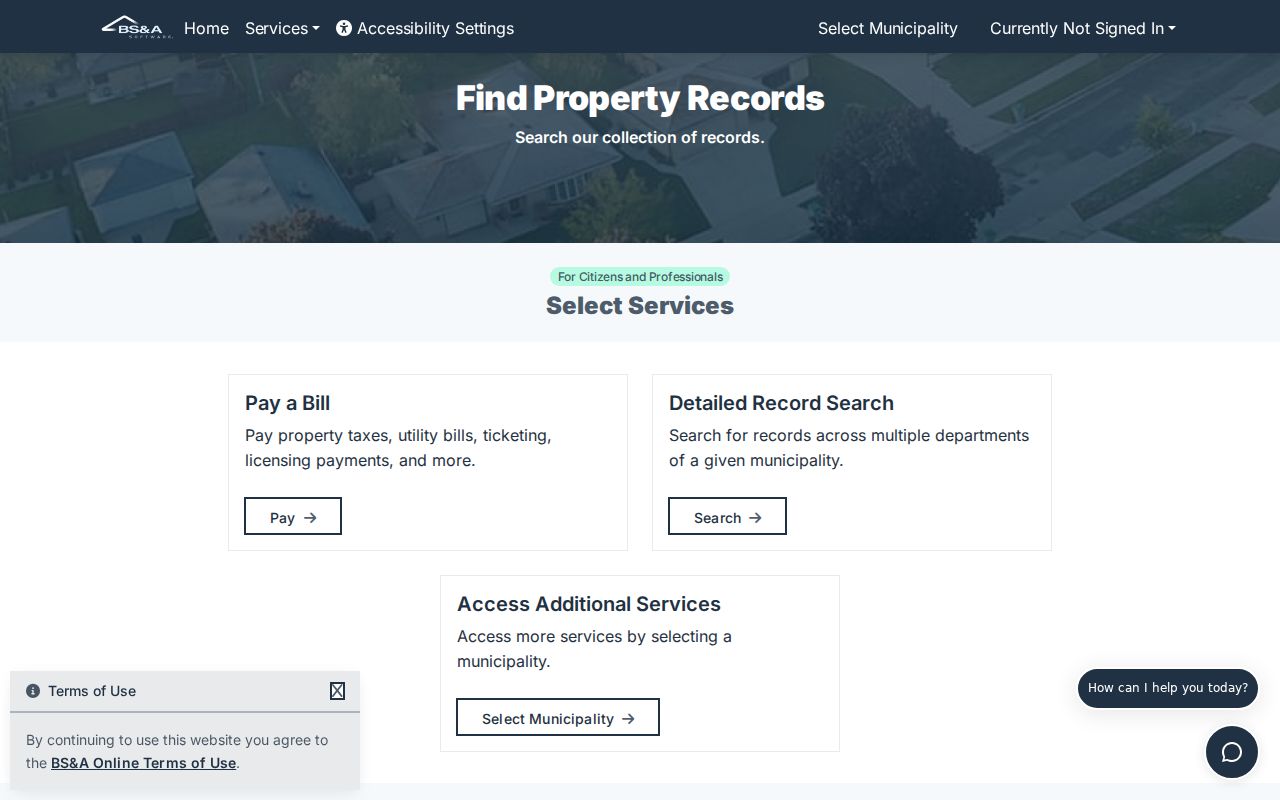
That entry point covers the assessing data itself, not any single parcel. For an actual address, rely on a live result paired with the newest recorded deed.
Read Clinton County Entity Owners
A Clinton County property owner may appear as an individual or married couple. The owner may also show as a trust, LLC, estate, fiduciary, or lender. Search spelling variants, suffixes, and the exact entity name. For an LLC or corporation, the official Michigan MiBusiness Registry Portal can confirm the business identity. It can also confirm registered-office information. That office address is not proof of where property sits. It is also not proof of who holds an interest in it.
Trust names often get shortened in a result. Estate names may appear during administration. A later executor, trustee, or beneficiary deed changes the recorded trail. Search the deed index under both full and abbreviated name forms. A probate order can explain a signer's authority. But the land instrument must still match the parcel before that party counts as the owner.
Watch Clinton County Owner Names
Fraud Guard lets a registered deed-search user monitor a name. The service sends an email when that name appears on a document recorded in Clinton County. An owner can catch new recorded activity this way, whether a mortgage, lien, or other property document.
The alert does not stop a recording. It also does not validate an instrument. Treat it as a watch tool, then review the index entry and full document with the Register of Deeds.
Request Clinton County Owner Records
If the online search or image access fails, the Register of Deeds accepts requests by mail, fax, email, and in person. The office is at 100 E State Street, Suite 2500, St Johns, MI 48879; rod@clinton-county.org; 989-224-5270. Posted hours are weekdays from 8 a.m. to noon and 1 to 5 p.m., with arrival by 4:30 recommended.
The county copy and search page states that real-estate copies cost $1 per page, certification costs $5 per full document plus copy pages, and a real-estate name search costs $0.50 per year with a $5 minimum. Fax or email delivery has a separate charge on the older request form and cannot deliver certified copies. Use the current fee page when the form and page differ.
Separate Clinton County Tax Status
A deed name answers only one question. It says nothing about whether the taxes are current. The Clinton County Treasurer tax route is separate. It searches by owner, address, or parcel. The county warns that online tax data are not legal documents and come with no warranty. A result may show delinquency and a total due as of a settlement date. FetchGIS adds tax-history and delinquent-tax fields. The Treasurer also flags foreclosed parcels. Michigan has already sold those, so the office will not accept payment. Compare the parcel key against county foreclosure material, the Register of Deeds, and current state guidance before assuming the tax-roll owner still controls the land. Tax status and owner identity stay separate questions. For a planned purchase, record the source date and carry the parcel number through each check. A same-name result without a matching PIN and legal description is not a safe owner match.
Set Clinton County Owner Limits
An owner lookup has real limits. It cannot name everyone who lives at an address, prove the owner gets mail there, or resolve every title defect. It also cannot overcome lawful confidentiality. Michigan's Address Confidentiality Program gives qualifying survivors a designated address and mail forwarding, and government entities must accept that address. Ownership records still serve many purposes: a purchase, a boundary issue, an easement question, an estate matter, property history, deed-fraud response, or civic research. Never try to defeat a protected address. When title must carry real weight, pull the recorded instruments and get appropriate professional review. A tax-roll name is never conclusive.
Lawful use. Clinton County owner records support legitimate property research. Never use a name or address to stalk, harass, threaten, or defeat a safety program.